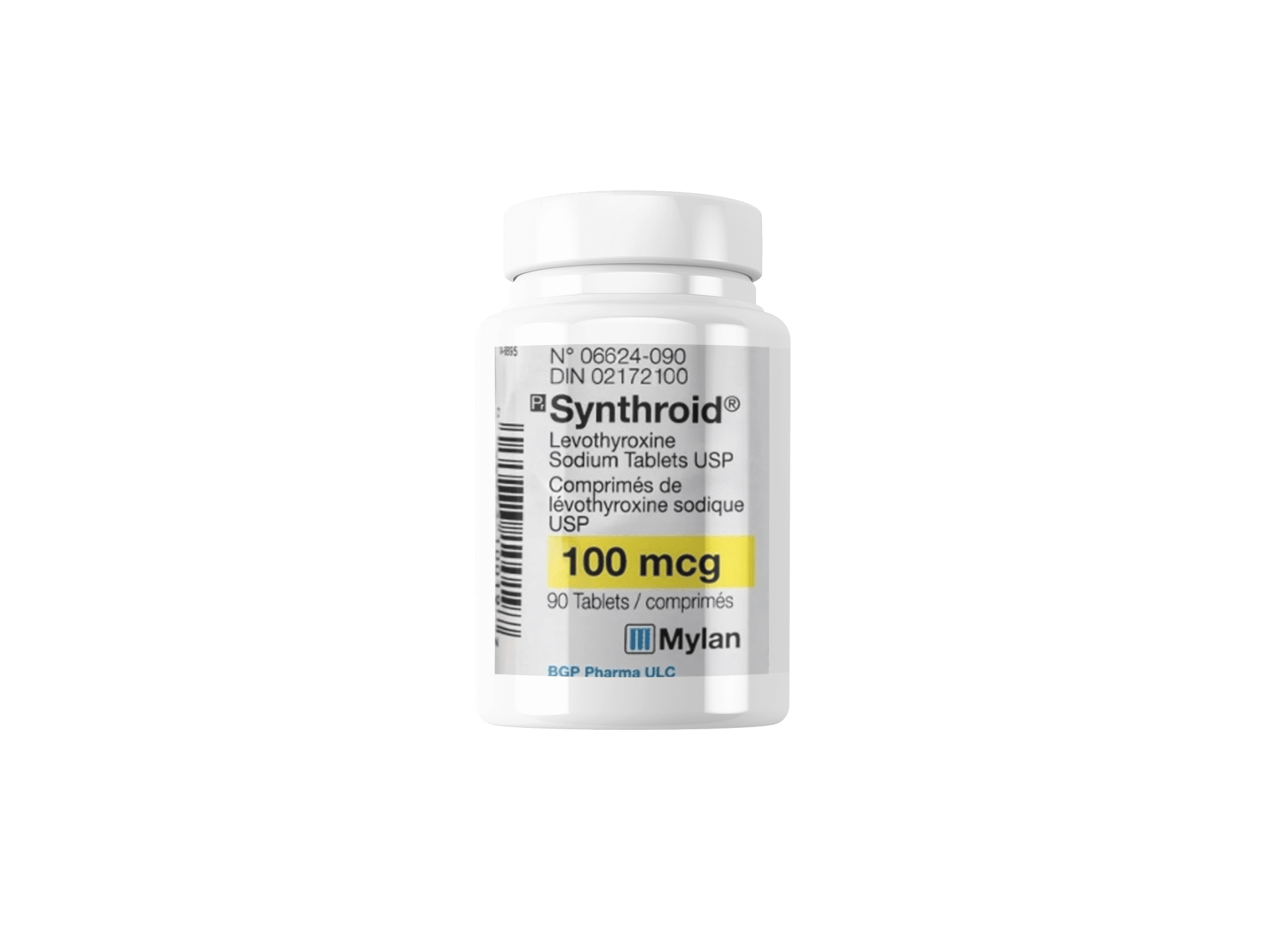
For visual reference only; actual product may vary
Prescription Required
All third-party products, company names, and logos are trademarks™ or registered® trademarks are and remain the property of their respective holders. Their use does not imply any affiliation with or endorsement by them. All references on this site to third-party trademarks are intended to constitute nominative fair use under applicable trademark laws.
Synthroid is a synthetic form of the thyroid hormone thyroxine.
Synthroid (generic: levothyroxine) is used to treat and manage various thyroid-related disorders. Synthroid replaces the naturally produced thyroid hormone thyroxine
Common side effects of Synthroid include:
fever,
hot flashes,
sensitivity to heat,
sweating,
headache,
nervousness,
irritability,
nausea,
sleep problems (insomnia),
changes in appetite or changes in weight,
changes in menstrual perdiods,
and temporary hair loss.
Hypothyroidism
Pituitary TSH Suppression
Treatment with Synthroid (levothyroxine) can lower levels of adrenal hormones, especially cortisol. Individuals with adrenal gland problems, such as adrenal insufficiency, may be at a higher risk for this side effect. They would not usually be prescribed Synthroid unless their adrenal hormone levels are in a normal range.
It’s widely reported that people who take Synthroid usually start to feel better within a few months. It’s also usually the case that they have more energy, and many people lose weight on Synthroid because it brings their basic metabolic rate back to normal. Benefits can include relief of depression and a positive outlook with greater interest in things.
With Synthroid treatment, the metabolic rate may be increased, resulting in losing weight. It's generally advised that even though Synthroid may cause weight loss, it should not be used specifically in order to produce weight loss. The Synthroid patient leaflet has a warning advising against using it for weight loss.
Synthroid (generic name: levothyroxine) may affect mood. It is meant to affect the levels of thyroid hormones, acting as chemical messengers in brain functions that control emotion and mood. While taking levothyroxine, patients who are feeling more nervous, irritable or anxious should talk to their healthcare provider
Increased appetite was a side effect reported in Synthroid studies, so it is possible to experience weight gain while taking Synthroid. Naturally, an increase in appetite can lead to weight gain. However, weight gain could also be a symptom of the hypothyroidism that Synthroid is meant to be treating.
Thyroid medications like levothyroxine are used to treat low thyroid levels (hypothyroidism). If a doctor has prescribed Synthroid for a patient having borderline hypothyroidism, it may be able to have the medication reduced steadily over time. In other cases for people with more active hypothyroidism, there may be a need for long-term thyroid medication. In both cases, the advice of a healthcare professional should be sought.
IsraelPharm has been delivering lost cost prescriptions from Israel for over 15 years worldwide. Daily flights allow us to get your medications dispatched fast! Delivery to the USA is under 10 days and you can track and trace every order.
For many women navigating menopause, the question of whether hormone replacement therapy (HRT) is safe has lingered for years -sometimes in the background, sometimes with real anxiety. The facts haven’t always been clear, and for
Anticoagulants have changed the way blood clotting disorders are managed, offering more predictable and convenient options than older therapies. Among the most widely used are Xarelto (rivaroxaban) and Eliquis (apixaban), both of which belong to
Early use of tirzepatide appears to improve blood sugar, weight, and several heart-related risk markers in people with recently diagnosed type 2 diabetes. Interim findings from the SURPASS-EARLY trial conducted by Eli Lilly showed that